
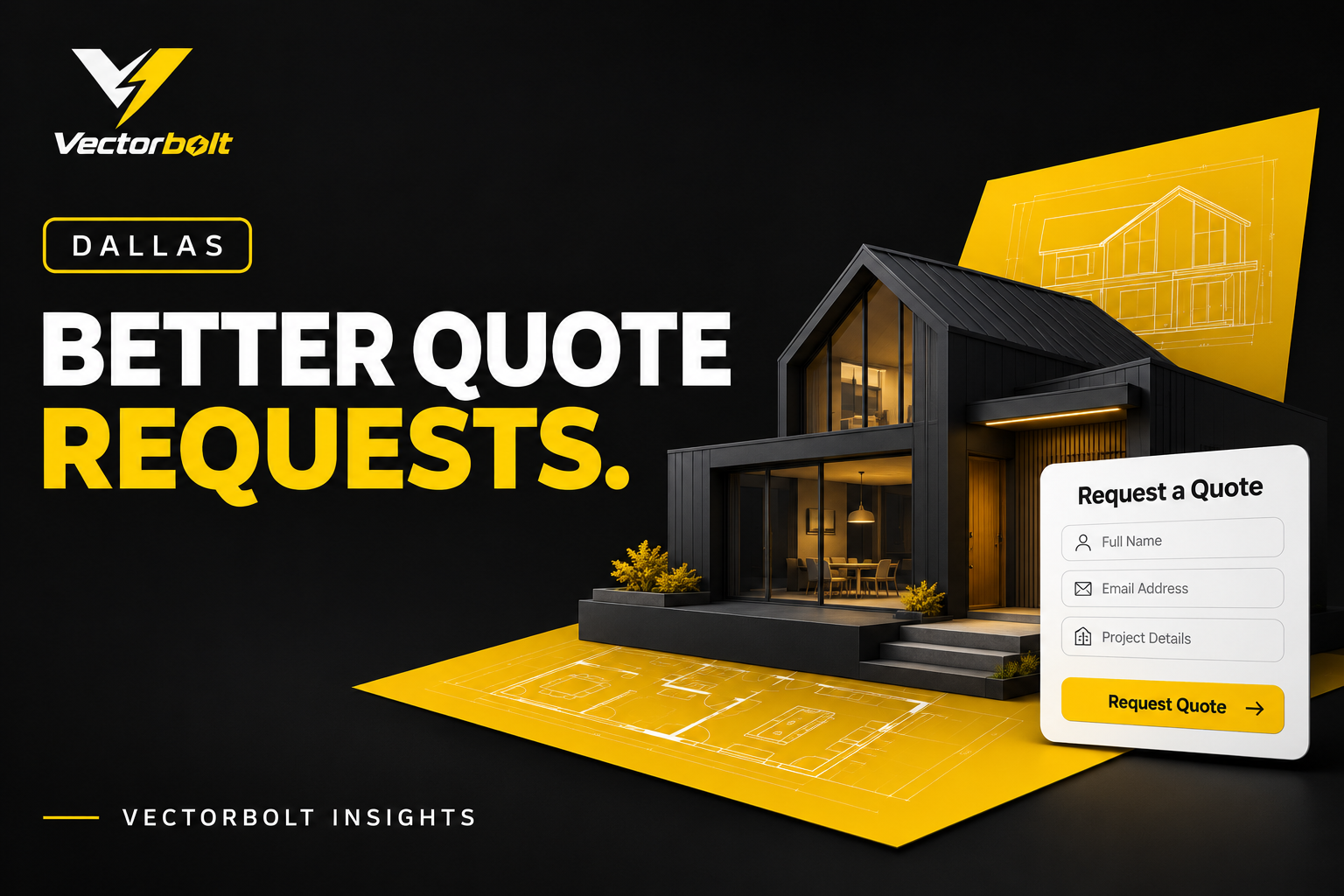
Dallas contractor website design should help a homeowner identify the right service and submit enough detail for the next conversation. A form that collects only a name and phone number can leave the contractor asking the same basic questions on every call.
Show real project evidence
Describe scope, location context, materials and verified project outcomes.
Improve estimate requests
Collect service type, project location, budget range where helpful and preferred timing.
Do not overcomplicate the form
Ask essential questions first. Drawings, detailed measurements and long specifications may be better collected after the initial screening.
Define the work and the actual service area
Separate major service types when they involve different decisions. A kitchen remodel, a roof repair and commercial tenant work need different examples and intake questions. State what the company handles, what it excludes and where it accepts projects.
Distinguish the City of Dallas from the wider Dallas-Fort Worth area. The City of Dallas economic development office describes a diverse business base, but that regional context does not determine a contractor’s travel radius. List only the places the company actually serves and explain any practical limits.
Show completed work with useful context
Project pages should identify the type of work, the starting condition, important constraints and the finished scope. Use real photographs with permission. A visitor comparing remodelers needs to understand the contractor’s role, not just see a large gallery of unrelated interiors.
Ask the contractor to verify credentials, insurance statements and any warranty descriptions before publication. Do not use generic trust badges or stock project images in a way that suggests work the company performed.
Collect estimate details in a sensible order
Start with service type, project location or ZIP code, a short description and preferred contact details. Ask about timing when it affects availability. Optional photographs can help with initial assessment, but the form should explain that an upload is not a substitute for inspection.
Use conditional questions only when they change the follow-up. A remodel request might need room type and approximate scope; a repair request may need a different description. Avoid making every visitor complete questions for every trade.
Explain what happens after submission
State whether the next step is a call, a paid consultation or a site visit. Make clear that submitting a request does not confirm a booking or a final price. Give an expected response window only if the business can maintain it.
Provide a working phone option for customers who prefer to call. If the company does not offer emergency service, do not use urgent language that implies round-the-clock response. Keep contact details consistent across service pages.
Test delivery and judge lead quality
Submit realistic test requests from a phone and a desktop. Check incomplete fields, large uploads, spam filtering and confirmation messages. Verify that the record is saved and that the appropriate person receives it; an attractive success message is not proof of email delivery.
Define useful outcomes such as qualified estimate requests, scheduled site visits and accepted proposals. Review out-of-area inquiries and unsuitable job types. Improve service explanations and form choices before spending more to drive visitors to an unclear page.
THE BOTTOM LINE
Qualifying the right projects is more useful than accumulating short enquiries that require repeated clarification.
Frequently asked questions
Should contractors show project prices?
Show prices only when the scope and assumptions are clear. If estimates depend on inspection, explain the factors that affect cost rather than publishing a misleading starting figure.
Should every suburb have a separate page?
Only when there is useful, distinct information to publish. A clear service-area page can be more helpful than dozens of nearly identical suburb pages.
Plan your website with Vectorbolt
Vectorbolt can build contractor service pages, project galleries and quote forms around the information your estimator needs.
Explore construction & contractor website development or discuss your project with Vectorbolt.
Sources
City of Dallas: business environment
